SiMa.ai Hardware Documentation
Use this site for hardware setup, firmware workflows, and low-level interfaces for SiMa.ai MLSoC Modalix products. Software, ML, and pipeline tooling are documented separately.
SiMa.ai Hardware at a Glance
SiMa.ai offers MLSoC Modalix as a chip, on a module, and in complete products. Start from the form factor that you have or plan to use.
| Product | What it is | Start here |
|---|---|---|
| MLSoC Modalix | The system-on-chip. You place it on a board that you design. | Build with the SoC |
| Modalix SoM | A module with the SoC, LPDDR5 memory, and power. It plugs into a carrier board. | Build with the SoM |
| Modalix DevKit | A Modalix SoM on a carrier board, in an enclosure, for evaluation and development. | Evaluate a DevKit |
| Modalix PCIe Card | A half-height, half-length card that adds Modalix inference to a host machine. | PCIe Mode |
To change the system software or add a camera on any of these, see Build System Software and Integrate Cameras.
SoM or Chip-Down
To build your own hardware, choose between a carrier board for the Modalix SoM and a board with the SoC placed directly on it. They need different design work, different collateral, and different bring-up.
| Chip-down design | Carrier board design | |
|---|---|---|
| What you design | A board with the packaged Modalix SoC on it, including memory, power, and clocks | A carrier board for the Modalix SoM, which already carries the SoC, LPDDR5, and power |
| Main design work | Power sequencing, clocks and reset, LPDDR5 routing and tuning, high-speed layout, interfaces, thermals | Connector mapping, power delivery, interfaces, thermals |
| Collateral | Chip-down design guide, SoC datasheet, and design packages, available from SiMa.ai under NDA | Public datasheets and bring-up guide |
| Software starting point | The Modalix BSP, with board-level adaptation | The Modalix BSP, with device-tree changes for your carrier |
After the board boots, both paths use the same system software. See Build System Software.
About the MLSoC Modalix
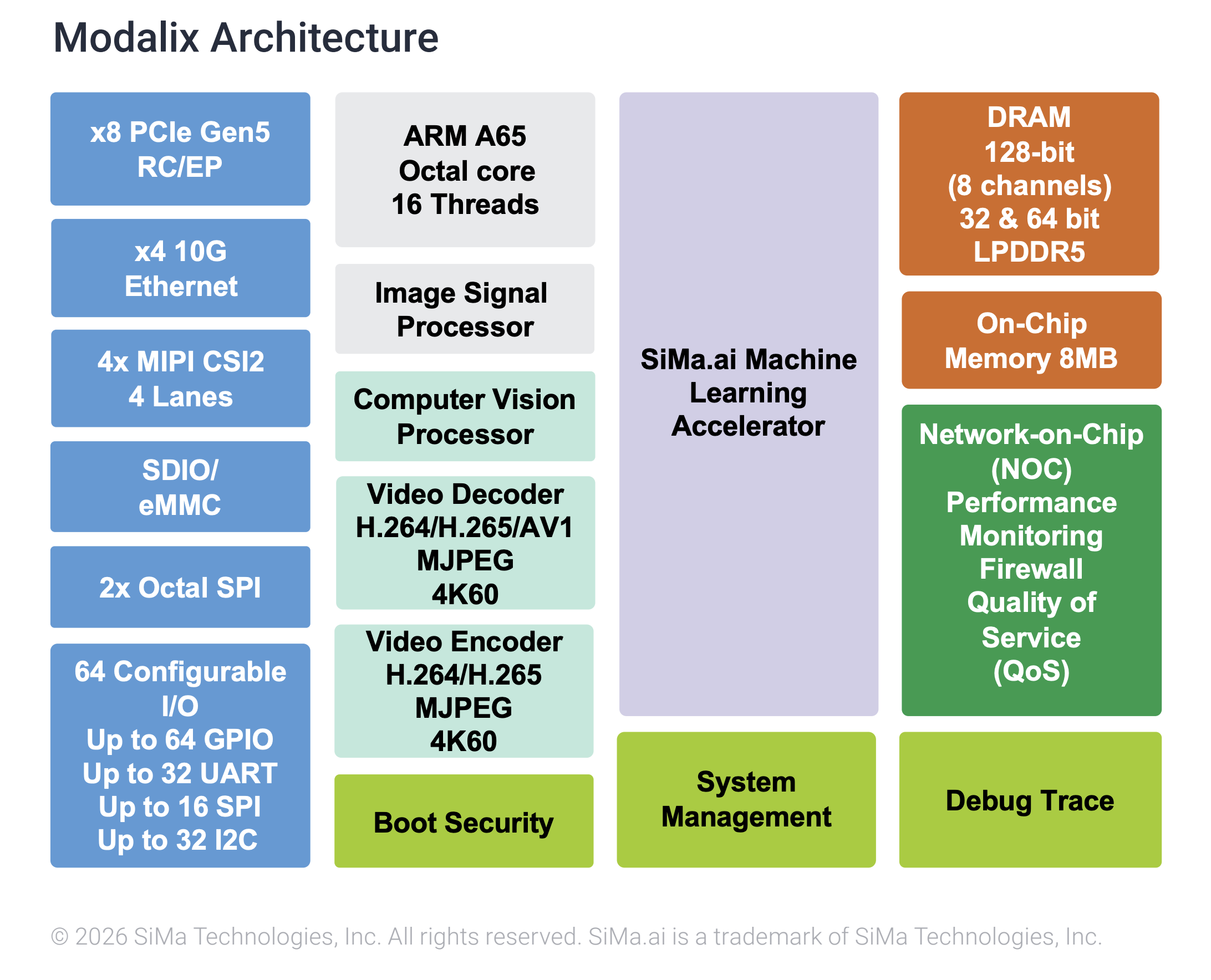
The MLSoC Modalix is SiMa.ai's second-generation machine-learning system-on-chip. It combines an Arm Cortex-A65 application complex, a high-throughput Machine Learning Accelerator (MLA), an Image Signal Processor (ISP) for camera ingest, and a Computer Vision Unit (CVU) for classical vision workloads — all on a single die.
This integration lets you run multimodal, generative, and vision AI pipelines at the edge without combining separate accelerators, host CPUs, and camera bridges. The Modalix SoM packages MLSoC Modalix for carrier-board and product integration, and every DevKit documented here uses the same silicon.
DevKit Portfolio
SiMa.ai offers MLSoC Modalix-based development kits and PCIe products for edge AI applications. Select a product below, or compare features in the table.
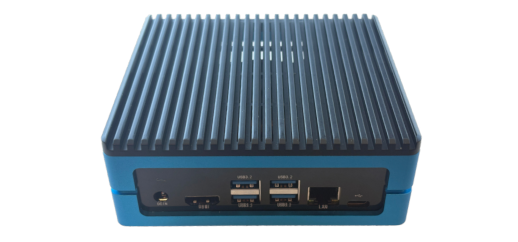
Modalix DevKit
The current development kit for evaluating MLSoC Modalix and building applications on the Modalix SoM.
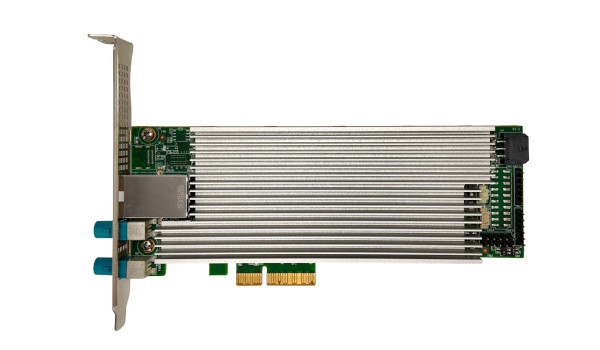
Modalix PCIe Card
Half-Height/Half-Length (HHHL) card designed for extensible edge compute systems.
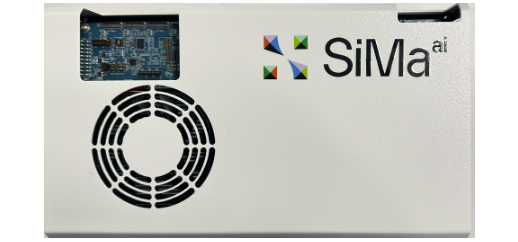
Modalix Early Access DevKit
Legacy development kit for existing Early Access customers.
Feature Comparison
| Feature | Modalix DevKit | Modalix PCIe Card | Modalix Early Access DevKit |
|---|---|---|---|
| Documentation & OS | |||
| Product Brief | view | view | view |
| Preloaded Operating System | eLxr Linux | eLxr Linux | eLxr Linux |
| Compute | |||
| ARM Cores | 8x Arm Cortex-A65 @ 1.4 GHz | 8x Arm Cortex-A65 @ 1.4 GHz | 8x Arm Cortex-A65 @ 1.4 GHz |
| ISP (Image Signal Processor) | Arm Mali-C71AE @ 1.2 GHz | Arm Mali-C71AE @ 1.2 GHz | Arm Mali-C71AE @ 1.2 GHz |
| CVU (Computer Vision Unit) | Synopsys EV74 @ 720 16-bit GOPS | Synopsys EV74 @ 720 16-bit GOPS | Synopsys EV74 @ 720 16-bit GOPS |
| Memory & Storage | |||
| RAM Size | 16 GB LPDDR5 (32 GB on earlier kits) | 8 GB or 16 GB LPDDR5 | 64 GB LPDDR5 |
| Storage | 16 GB eMMC, 500 GB NVMe | 32 GB eMMC | 10 GB eMMC |
| SD Card Slot | ✖ | ✔ | ✔ |
| Networking | |||
| Ethernet | 1x 1GbE | 1x 10GbE | 1x 1GbE (end0), 1x 10GbE (end1), 2x 10GbE SFP+ (end2/3) |
| Camera Inputs | |||
| MIPI CSI | 2x 2-lane MIPI CSI | ✖ | 4x 4-lane MIPI CSI |
| GMSL2 over FAKRA | ✖ | 2x GMSL2 over FAKRA | ✖ |
| I/O & Display | |||
| GPIO / Headers | 40-pin GPIO header | ✖ | 40-pin GPIO header |
| USB | 4 USB 3.2 ports | ✖ | ✖ |
| HDMI | 1 HDMI 1.4 port | ✖ | ✖ |
| Graphics Controller | Silicon Motion SM768 | ✖ | ✖ |
| Video Codecs | |||
| H.264/H.265 Encoder | 4kp60 | 4kp60 | 4kp60 |
| MJPEG Encoder | 4kp30 | 4kp30 | 4kp30 |
| H.264/H.265 Decoder | 4kp60 | 4kp60 | 4kp60 |
| AV1 and MJPEG Decoder | 4kp60 | 4kp60 | 4kp60 |
| Form Factor | |||
| Host-attached PCIe card | ✖ | ✔ | ✖ |
Deployment Architectures
MLSoC Modalix supports two common development architectures: standalone mode and PCIe mode. Choose the architecture that matches how your hardware is connected and where your application runs.
- Standalone Mode
- PCIe Mode
In standalone mode, a Modalix DevKit or a custom Modalix SoM-based system runs as a self-contained device. Use this mode when the device receives data directly from sensors, cameras, storage, or network interfaces.
Key Use Cases
- Edge AI applications: Run inference without relying on a central server or cloud infrastructure.
- Compact deployments: Reduce the need for additional host hardware.
- Power-constrained systems: Support remote monitoring systems powered by batteries or solar panels.
Advantages
- Self-contained: Runs without a host machine.
- Power efficient: Supports power-sensitive environments.
- Compact: Fits space-constrained deployments.
Typical Data Flow
- The DevKit receives data directly from network interfaces or sensors.
- The DevKit loads a NEAT application that defines the on-device inference pipeline.
- MLSoC Modalix performs inferencing and processes the data locally.
- Results are sent to other devices or systems via network connections for further action or visualization.
In PCIe mode, the Modalix PCIe Card is installed in a host machine. Use this mode when a server, desktop, or workstation handles orchestration, storage, and I/O while the card provides Modalix inference acceleration.
Key Use Cases
- High-performance systems: Use a data-center server or workstation for data processing and storage while the Modalix PCIe Card runs inference.
- Host-managed I/O: Use host storage, networking, or sensor ingest while offloading inference to the card.
Advantages
- Dedicated acceleration: Offload inference from the host CPU to Modalix hardware.
- Expandable capacity: Add inference cards as demand grows.
Typical Data Processing Flow
- The host machine captures data from sensors, peripherals, storage, or network interfaces.
- The Modalix PCIe Card loads a NEAT application that packages the inference pipeline and adapted AI model.
- The host sends data to the Modalix PCIe Card over PCIe.
- The host processes the results or forwards them to downstream systems.
Choose Your Path
Evaluate a DevKit
Set up a Modalix DevKit or PCIe card, keep it updated, and start developing.
Build with the SoM
Choose a carrier board for the Modalix SoM, or design and bring up your own.
Build with the SoC
Put the Modalix SoC directly on your own board.
Build System Software
Build the kernel, U-Boot, and device trees, and flash your own image.
Integrate Cameras
Choose a supported MIPI camera, connect it, and select its overlay.
Reference & Downloads
Find product briefs, datasheets, design guides, pin maps, and tech notes.
Already know what you need?
- Build the kernel, U-Boot, and device trees
- Write a device-tree overlay
- Find the source commit for a release
- Flash your own image to a board
- Build an update package
- Compare carrier boards
- Map GPIO, UART, I2C, and SPI pins
- Configure MIPI cameras
- Update or recover a DevKit
- Flash and test boards in production
- Find a datasheet or design document
Get Started
Pick the path that matches your setup. Each guide covers serial-console access, network bring-up, and firmware management for that mode.